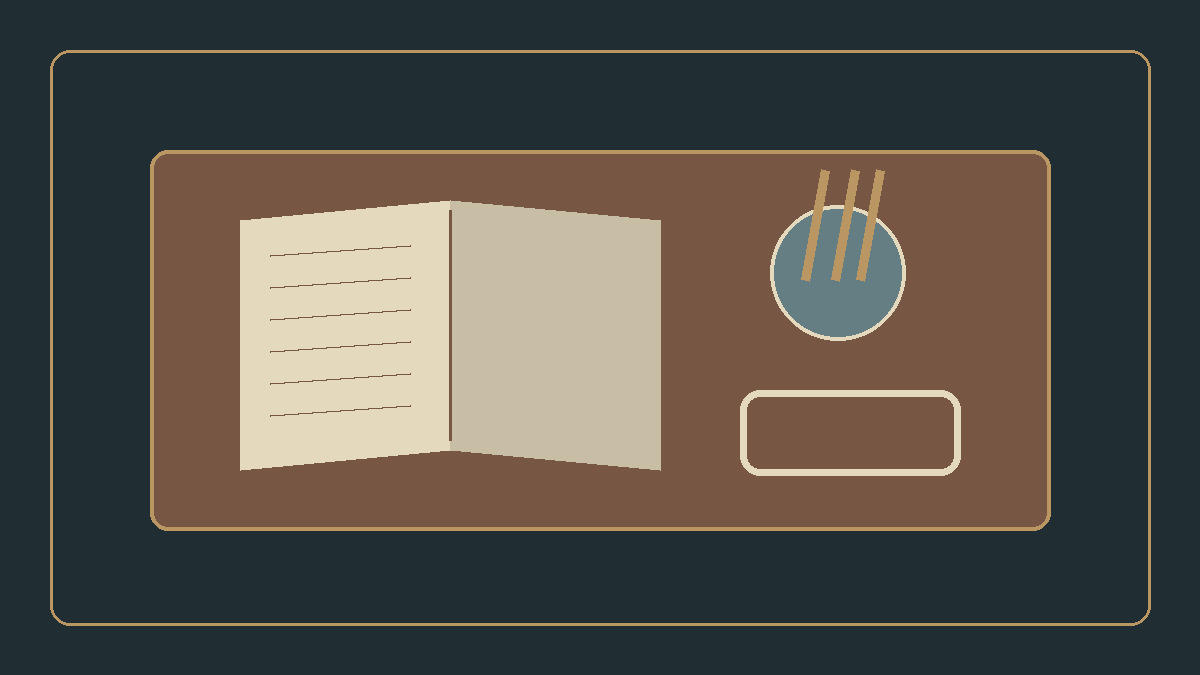
Turn a working desk edge into a quiet scene
When planning a small steampunk corner with everyday objects, start with an action the space already supports, such as writing a note or setting down a book. A desk edge can suggest an imagined workshop through the relationship between a notebook, a shallow tray and a simple container. You do not need to make ordinary objects look like historical artefacts. Give them a coherent arrangement while keeping their real use visible. The scene should also work when you sit down.
Choose a scene with an ordinary task
Describe what someone might do in this corner: record an observation, sort small items or sketch an idea. Use that task to select objects you already own. A notebook and a pencil holder can establish a convincing relationship without decorative machinery. Its practical role provides enough information without an invented history. If a piece does not help the scene or the desk, leave it aside while you build the arrangement.
Work within the reach of your hand
Sit in your normal position and reach for the things you use regularly. Keep that path clear before adding a display behind it. A container that looks appealing but blocks a drawer will quickly become an obstacle. Check the position of cables and leave equipment ventilation unobstructed. Arrange decorative objects away from places where a sleeve might catch them. The available space is the area left after everyday work has been allowed for, rather than the whole desktop.
Build depth without hiding useful objects
Place a taller notebook or container behind a lower tray and inspect the overlap. Each outline should remain understandable from your usual seated position. You can suggest depth with modest differences in height instead of stacking unstable objects. Keep heavy pieces on a firm surface and avoid leaning objects against equipment. An arrangement should remain secure when the desk is used normally. If reaching for a pencil disturbs everything else, simplify the group and try another placement.
Connect the scene through repeated edges
Look for a shared line, such as the straight edge of a notebook echoed by the tray beneath it. Repeating a shape can bring unrelated objects together without altering them. Compare the arrangement under the light you normally use for work. Reflections should not make the desk uncomfortable to look at. Leave existing finishes alone unless you have material specific instructions for changing or cleaning them.
Make room for the unfinished day
Set aside an open area for temporary papers and the book you are currently using. A desk corner should accommodate work in progress instead of requiring everything to be hidden immediately. When the arrangement becomes crowded, remove a display piece before taking over the useful area. Record a pleasing version with a sketch if you want to return to it. Review what stayed convenient after actual use and let those observations guide the next small adjustment.
FAQ
Do I need objects with gears on them?
No. A relationship between tools, containers and writing materials can suggest a workshop. Literal mechanical motifs are optional and should earn their space like any other detail.
Can I include a functional desk lamp?
Yes, provided it remains suitable for its normal use. Follow its instructions, keep required clearances and arrange the scene so that light reaches your work comfortably.
What if the desk is shared?
Agree on the working area first and choose a display that is easy to move together. A suitable tray can help, provided it stays stable and does not obstruct either person.